
City Driving vs Highway Miles: What Actually Wears Out Your Brakes Faster
Two cars can travel the same number of miles and have very different brake wear. A vehicle that spends 30,000 miles cruising on open highways may still have plenty of brake pad material remaining, while another vehicle with fewer miles can already need brake service after years of stop-and-go commuting.
For drivers around Maryland, Virginia, and Washington, D.C., the type of driving you do can tell you more about brake wear than the odometer alone. Beltway congestion, downtown streets, traffic lights, steep grades, vehicle weight, and driving habits all affect how hard the braking system has to work.
Does City Driving Wear Out Brakes Faster?
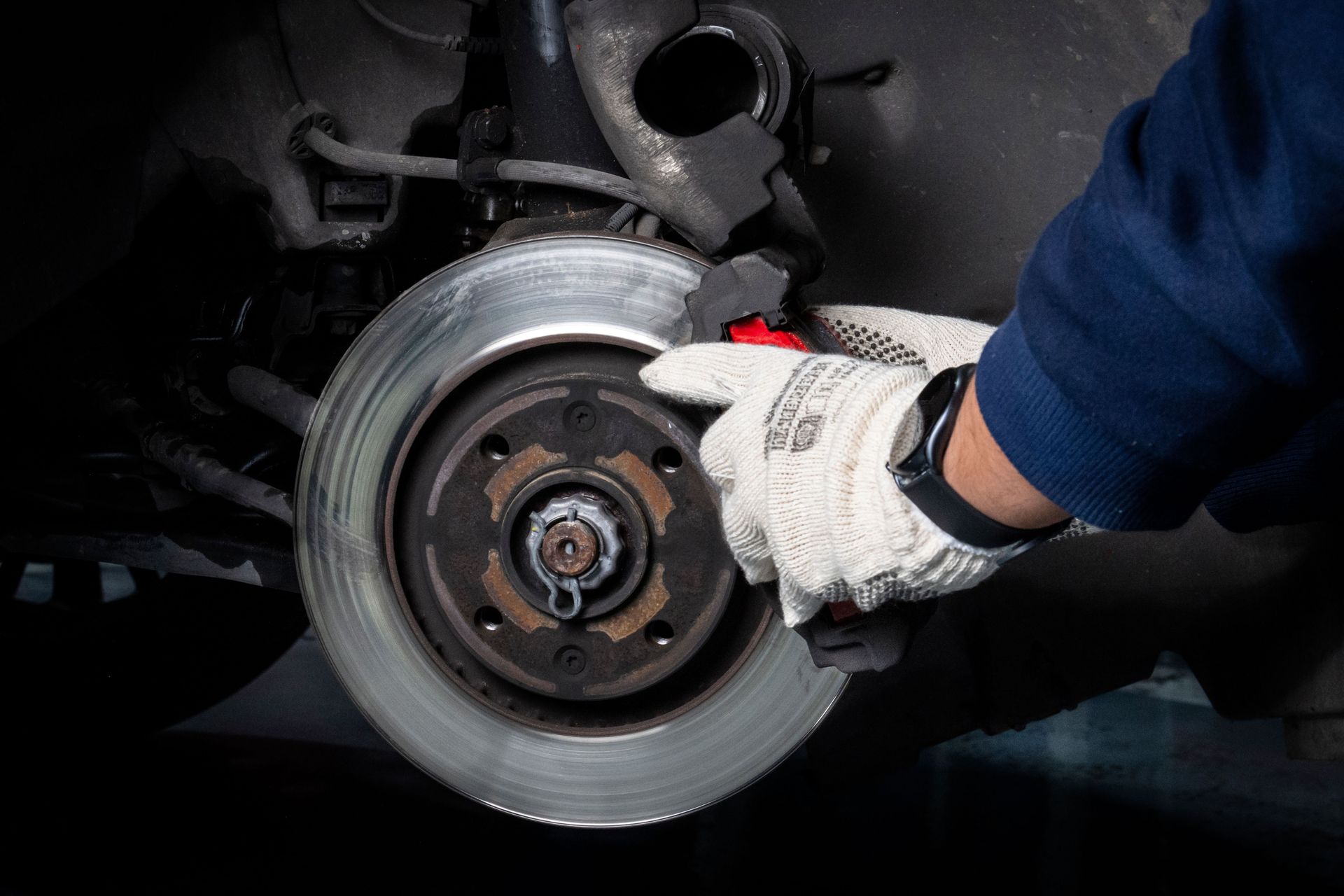
Under normal conditions, yes. City driving usually wears brake pads and rotors faster than steady highway driving because the brakes are used much more frequently. Every stop creates friction between the brake pads and rotors, converting the vehicle's motion into heat and gradually wearing the friction material.
A 10-mile trip through city traffic might involve dozens of traffic lights, intersections, turns, pedestrians, and changes in traffic speed. During 10 miles on an uncongested highway, you may accelerate once, cruise for most of the trip, and barely touch the brake pedal until reaching your exit.
The DMV has plenty of roads that fall somewhere between those two examples. I-495, I-95, I-270, Route 50, and other major routes can offer steady cruising when traffic is light and constant braking during rush hour. A highway commute spent crawling through congestion can be much harder on brakes than the term “highway miles” suggests.
Why Highway Miles Can Be Easier on Your Brakes
A highway trip adds miles to the odometer without necessarily adding much brake wear. At a steady speed in light traffic, the brakes may go long stretches without being used. They also have more time to cool between applications.
This helps explain why mileage alone is a poor predictor of brake life. A higher-mileage vehicle driven mostly on open interstates may have experienced fewer braking cycles than a lower-mileage vehicle used every day in Washington-area congestion.
Highway driving becomes more demanding when you repeatedly brake from higher speeds, encounter heavy traffic, travel down long grades, tow a trailer, or carry heavy loads. More vehicle speed and weight mean the brakes have more energy to manage when slowing down.
Heat and Driving Style Also Affect Brake Life
Brakes are designed to handle high temperatures, but repeated hard braking can build heat faster than the system can release it. Excessive heat can contribute to faster pad wear, rotor problems, changes in braking feel, and, in severe cases, temporary brake fade.
Driving habits have a direct effect on how much heat and wear you create. Following closely often leads to repeated braking every time traffic changes speed. Accelerating toward a red light and braking late also asks more from the brakes than easing off the accelerator early and slowing gradually.
Leaving a reasonable following distance and looking farther ahead in traffic can reduce unnecessary braking without requiring you to drive unusually slowly. You have more room to respond gradually instead of reacting to every small speed change made by the vehicle ahead.
Does an Electric or Hybrid Vehicle Wear Brakes Differently?
Often, yes. Hybrids and electric vehicles commonly use regenerative braking, which allows the electric motor to help slow the vehicle while recovering energy. That reduces how often the conventional friction brakes have to provide all of the stopping force.
Brake pads on some hybrids and EVs can consequently last much longer than they would on a comparable gasoline vehicle. Longer pad life doesn't eliminate the need for brake inspections. Rotors can still develop corrosion, calipers and slide mechanisms need to operate properly, brake fluid requires attention, and the friction brakes still need to be ready when called upon.
How Long Should Brake Pads Last?
There isn't one mileage at which every vehicle needs new brake pads. Vehicle weight, brake design, pad material, traffic, towing, terrain, regenerative braking, and driving habits can all change how quickly the pads wear.
A brake inspection provides more useful information than an arbitrary replacement mileage. A technician can measure the remaining friction material, examine the rotors, check for uneven wear, inspect the calipers and hardware, and look for leaks or other problems.
If most of your miles come from heavy DMV traffic, your brakes may need attention sooner than those on a vehicle accumulating the same mileage on open highways. Conversely, high mileage alone isn't a reason to replace brake components that remain within specification and are working correctly.
What Are the Signs That Your Brakes Need Attention?
Squealing and scraping noises are common warning signs, but they aren't the only ones. Pay attention to vibration while braking, a change in pedal feel, pulling to one side, increased stopping distance, or a brake warning light.
A grinding sound deserves prompt attention. If brake pad friction material has worn away, metal components can contact the rotor and cause additional damage. What might have been a routine brake service can become a more extensive repair if the vehicle continues to be driven.
Changes can also happen gradually. If the brake pedal feels different or stopping performance doesn't seem as predictable as it used to, having the system inspected is safer than waiting for a specific noise or mileage reading.
Front and Rear Brakes May Wear Differently
Brake wear isn't necessarily equal at all four wheels. Weight transfers toward the front of a vehicle during braking, and vehicle design and electronic braking systems determine how braking force is distributed between the front and rear.
Uneven wear can also indicate a mechanical problem. A sticking caliper, seized slide pin, or damaged component can cause one brake pad or one axle to wear much faster than expected. A proper brake inspection should look at the system as a whole rather than judging its condition from a single wheel.
City or Highway: Which Is Harder on Your Brakes?
For most drivers, city and stop-and-go driving will wear brakes faster than steady highway travel. The more useful question, though, is what your normal commute actually looks like. A clear run down I-95 is easy on the brakes. An hour of repeated slowing and stopping on the Beltway isn't, even though both trips count as highway driving.
Instead of trying to predict brake life from mileage alone, pay attention to your driving conditions and have the brakes inspected periodically. That gives you an actual measurement of pad and rotor condition rather than an estimate based on how many miles are showing on the odometer.
Schedule Brake Service at General Service Center
DMV driving can include everything from downtown stop-and-go traffic to long stretches of interstate, so brake life can vary considerably from one vehicle to another. Regular inspections can show how much pad material remains, whether the rotors are wearing properly, and whether the rest of the braking system is operating as it should.
If you're hearing brake noise, feeling vibration, noticing a change in pedal response, or simply aren't sure how much life your brakes have left, contact General Service Center. Our technicians can inspect your braking system, explain what they find, and recommend the service your vehicle actually needs for driving around Maryland and the greater DMV area.